Scaling opportunities for 97 clusters: key takeaways from the Cluster Management Excellence Course by the ITBridge
The intensive Cluster Management Excellence course, held as part of the ITBridge strategic initiative, has successfully concluded. The program featured four practical workshops, bringing together 189 delegates from 97 clusters across Ukraine and the European Union.
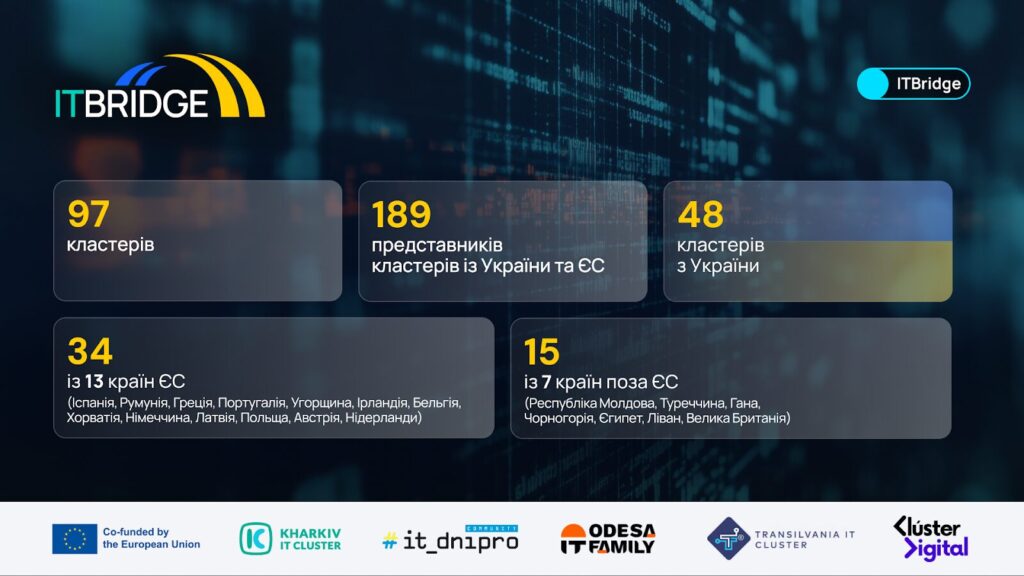
The training enabled Ukrainian communities to adopt the expertise of leading European specialists with ECEI Gold certification, establish a direct dialogue with EU peers, and strengthen international ties. These steps are crucial for the transformation of the cluster model in Ukraine.
We would like to express our gratitude to our speakers for their deep expertise:
- Bianca Muntean — CEO of Transilvania IT Cluster (ECEI Gold Label), with over 25 years of experience in building ecosystems, founder of the first DIH in Romania, and Honorary Consul of Estonia.
- Ciprian Morcan — Founder of Hygia, Cluster Manager at Transilvanian Furniture Cluster, Certified Management Consultant (CMC).
- Andreea Toma — Consultant at Hygia, International Projects Team Lead, and expert in strategic planning and EU project development.
- Lucia Seel — International expert in cluster policy and development, former member of the European Commission’s Expert Group on Clusters (DG GROW), founder of an EU cluster consultancy, ESCA/EUCLES Gold Label assessor, TCI Board member, lecturer, and trainer.
- Antonio Novo — President of the European Clusters Alliance, CEO of Cluster IDiA, EU cluster policy expert, advisor on S3, I3, Industry 5.0, and eDIHs, and a leader in innovation and digital transformation.
Key insights and practical recommendations from the workshops
Workshop 1: Strategic planning and ensuring sustainable development
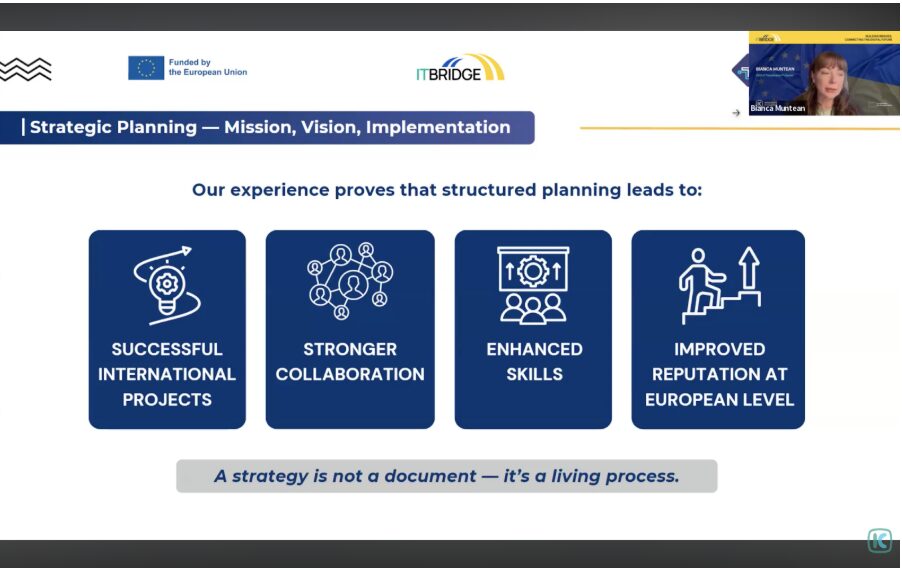
- A strategic plan is not a constant, but a flexible mechanism. It requires regular adjustment in line with market transformations and the current needs of community members.
- The true role of associations lies in shaping new market niches, rather than just supporting networking. A cluster acts as a key mediator between technology developers, business, and the state.
- Interaction with partners is built on the continuous strengthening of trust. It is vital to account for the differing expectations of the private and public sectors, offering each side clear and practical value.
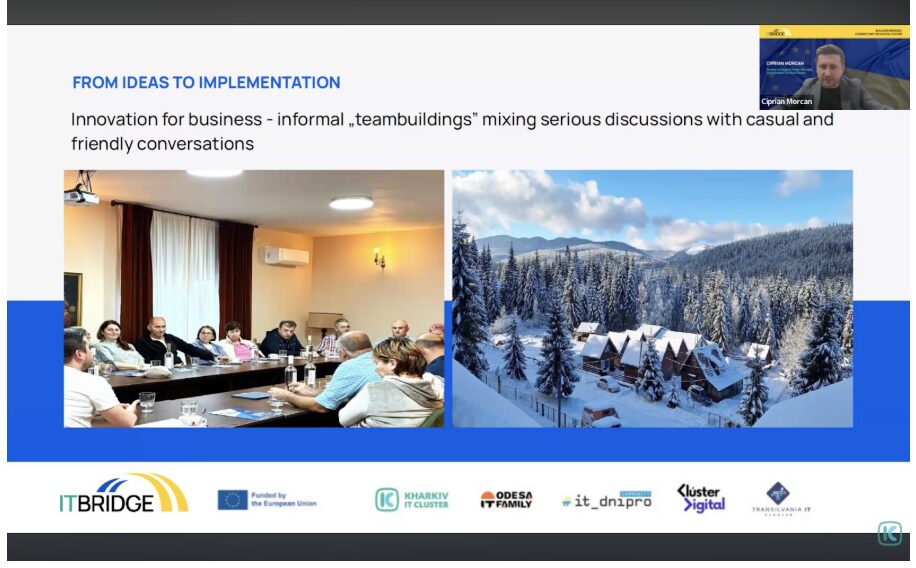
- Collaboration with European colleagues begins with interpersonal contacts and local initiatives (joint events, memoranda), which eventually scale into major international projects.
- The effectiveness of a cluster’s work is determined not by the number of reports, but by the tangible achievements of its participants: new contracts, professional growth, and implemented innovations.
Workshop 2: Developing high-value services for members
- Services should be developed with participants, not for them. Constant feedback, surveys, and joint workshops guarantee that services will meet current business needs.
- A quality product is the result of deep market analysis, strategic planning, and partner mapping, rather than random initiatives. Move from generating ideas to their clear structuring.
- Apply a “one-stop-shop” approach. Combine business support tools, skills development, networking, internationalization, and R&I into an integrated service model.
- Creating specialized centers of excellence, laboratories, or testing environments significantly increases the cluster’s reputation and provides participants with access to unique resources.
- The sustainability of a service model is based on deep integration into the ecosystem and long-term relationships. Cooperation should be the main operational principle, not a one-off action.
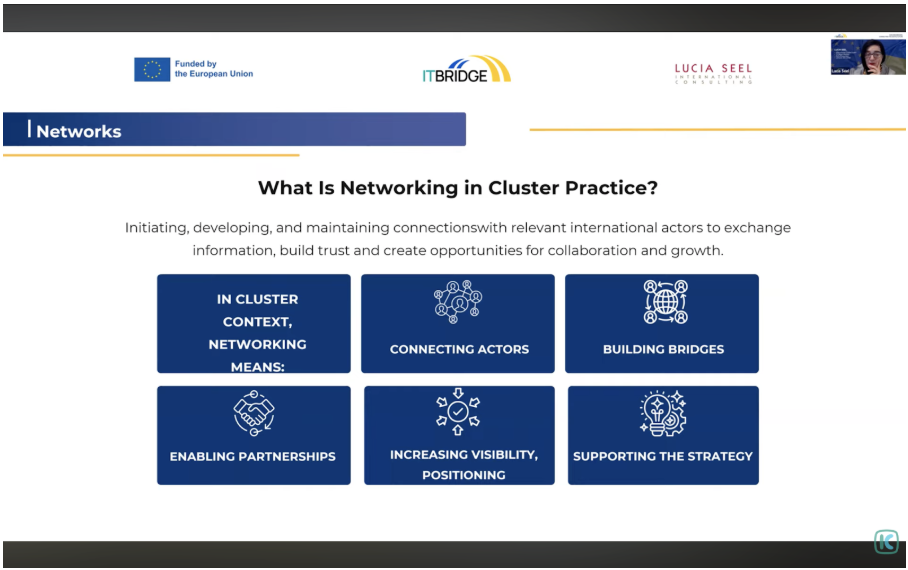
Workshop 3: Business development, internationalization, and communication strategies
- International activity is only a means to an end. Entering the international arena is appropriate only when it brings real benefits to members: new partnerships, grant funding, market opportunities, and ecosystem resilience.
- Effective expansion begins with strategy. It is necessary to analyze internal resources, clearly formulate the cluster’s international identity, and develop a step-by-step action plan based on member needs.
- Work in networks such as ECCP, TCI, industry associations, and EU projects must be systematic and align with the organization’s general development vector, rather than being a set of random activities.
- The cluster’s task is to be an active intermediary: creating new connections, organizing business missions, and converting international contacts into real business results for its companies.
- A cluster exists as long as communication works. Only through transparent, regular, and two-way dialogue are trust, member engagement, and the true value of the association built.
Workshop 4: Stimulating innovation and integrating new technologies
- Technological transformation must start with a specific business challenge, not the technology itself. Implementation of solutions is only appropriate when it solves a real problem and brings a measurable result.
- Different companies have different levels of digital maturity. That is why cluster innovation support services must be adapted to the needs of specific groups of participants.
- It is important to follow a clear sequence of actions: conducting a diagnosis → implementing a pilot project (on the principle of “test before you invest”) → full integration → further scaling.
- Evaluate the cluster’s work not by the number of events, but by specific impact indicators: the volume of successful implementations, the level of resource savings, and the growth of business productivity.
- Instead of being a direct provider, the cluster should act as a connecting link, coordinating the interaction of SMEs with EDIH, DIH networks, financial instruments, and technology partners.
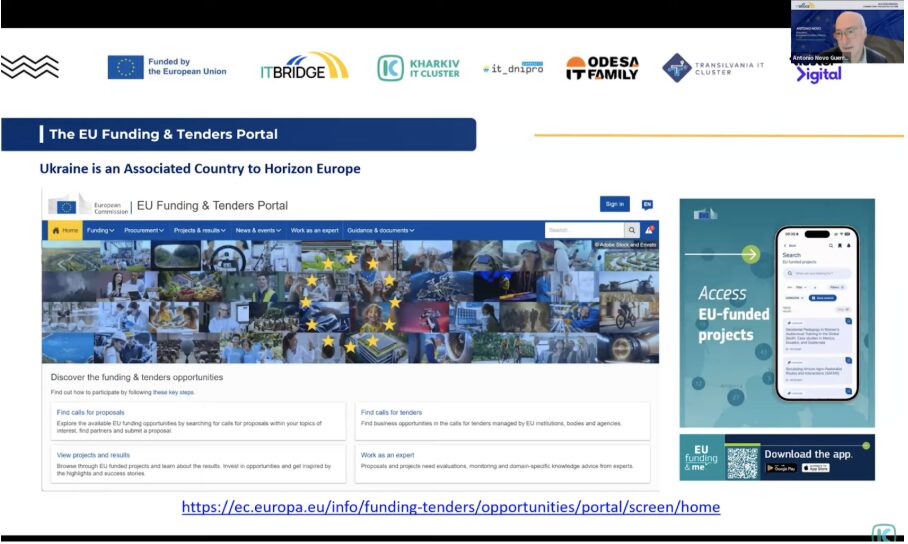
The program provided participants with a practical toolkit for improving strategic planning, modernizing services for members, scaling at the international level, and stimulating technological development.
What prospects open up for clusters thanks to the course?
- Loyalty growth: increasing the level of engagement and satisfaction of community members.
- Strategic resilience: creating effective development plans with clear performance indicators.
- Global integration: establishing sustainable partnerships with organizations within the EU.
- Innovation breakthrough: activating cross-sectoral interaction and accelerated implementation of new technologies.
This training course has become an impetus for systemic transformations that will help Ukrainian clusters strengthen their resilience, increase competitiveness, and become an integral part of the European innovation network.
Organizers & Partners:
This course is organized by Kharkiv IT Cluster, Transilvania IT Cluster, Cluster Digital de Catalunya, Dnipro IT Community, and Odesa IT Family as part of the ITBridge project — a strategic initiative to strengthen cooperation between the European Union and Ukraine in the digital sector.
The ITBridge project is funded by the European Union through the Single Market Programme under the grant agreement №101196018. Views and opinions expressed are however those of the author(s) only and do not necessarily reflect those of the European Union or European Innovation Council and SMEs Executive Agency (EISMEA). Neither the European Union nor the granting authority can be held responsible for them.